“One of the ways that you care for yourself is connecting with your spirit.”
Dr Rheeda Walker.
Many of us think that healing or self-care is only about the work we do on our outer selves; going to the sauna, having massages, taking a spa break (my personal favourite!) or maybe even accessing talking therapy. But it is connecting with our spirit that helps us to truly care for ourselves, it supports everything else we do to stay well.
In her book, The Unapologetic Guide to Black Mental Health, Dr Rheeda Walker reminds us:
“You are not going to survive everything that comes at you without a strong dose of spirituality.”
That line resonates deeply.
I’ve always felt a sense of a higher power, from when I was a young child, but in the past I didn’t give it the space or energy to become anything more than a feeling. A whisper that I would notice and then let drift away like a floating cloud, but knowing it would come back and whisper in my heart again.
As life continues to life and the older I’m becoming, my sense of a higher power has deepened, and so has my desire to connect with it and with spirituality. I am absolutely not spiritually enlightened, not even close! But I am passionate and committed to nurturing a spiritual connection and developing spiritual awareness- and if you’re reading this, I guess you are too!
So, what is spirituality and spiritual wellness?

Spirituality is a deeply personal experience.
It’s about believing in something greater than yourself, something beyond people, beyond the physical, and recognising your connection to that greater, higher power.
To seek spirituality is to explore meaning and purpose in your life. It’s a journey of connecting with the higher power to reflect on questions like, ‘Why am I here?’ and ‘what should I be doing with my life?’ When you actively seek these answers, you are likely to find a deeper sense of peace, joy and fulfilment along the way.
Being spiritually well can consist of:
- Having a sense of what gives your life meaning and direction.
- Experiencing inner peace, even when life feels uncertain.
- Feeling connected to a higher power or to something beyond yourself.
- Nurturing a positive and honest relationship with yourself.
- Practising forgiveness and compassion- for others and for yourself.
- Expressing gratitude for the simple things in life.
Religion is a form of spirituality, but they are not the same thing. You can practice spirituality without belonging to a particular religion.
Religion is an organised set of beliefs and practices shared by a community of people, it often provides structure and collective meaning to a higher being.
Spirituality is the personal experience of connecting with a higher power, the inner work of understanding your place within something larger than yourself.
Many people find spiritual connection within religion, others may find spiritual connection outside of religion, or, like me, you may find spiritual connection in both!

Here are some ways you can begin to seek or cultivate spiritual wellness:
Religion or faith practice: engaging in worship and belonging to a community that deepens your connection to the divine.
Prayer: communicating with a higher power to express thoughts, emotions, gratitude or desires.
Meditation: intentionally focusing the mind to cultivate awareness, presence, and inner calm.
Spending time in nature: grounding yourself in the beauty and rhythm of the natural world.
Journalling: writing down your thoughts, feelings, experiences or reflections to gain clarity, self-awareness and emotional insight
Movement or creative expression: Using movement or creativity (dance, yoga, music, art) as intentional acts of presence, surrender and connection. Moving out of constant thinking and into deeper being.
Rick Warren wrote something in his book, The Purpose Driven Life, that really moved me, and it feels fitting to share it with you right here, right now:
“Spiritual Growth is not automatic. It takes an intentional commitment. You must want to grow, decide to grow, make an effort to grow and persist in growing”.
Whichever way you connect; through prayer, stillness, music or movement, spiritual wellness grows when we make space for it.
Because Sometimes Strength Isn’t Enough:
We’re often told to:
“Stay strong”
“Keep going”
“Push through”
Sometimes these words of encouragement might work. Our personal strength can help us stand tall in the middle of life’s storms. Our courage, commitment and resilience can be tools that can carry us through tough seasons, heartbreaks and uncertainty.
But.
There can be times when strength alone is not enough.
When the motivational words no longer motivate us. When the determination begins to fade away. When courage begins to buckle underneath the weight.
In those moments, when we realise our personal strength isn’t enough, we need spiritual wellness.

Having spiritual wellness gives our strength somewhere to rest, it means we no longer need to put on a brave face, or keep showing up when we are exhausted, or pretend we’re fine when we are not. Spiritual wellness helps us to let go of our urge to control things we have no control over and to trust that things will work out anyway. It helps us to find meaning when we can’t make sense of the struggle, to feel at peace when there is chaos all around us.
Spiritual wellness is not about never falling apart, its about knowing and feeling where to go and what to do when you do fall apart. When we are spiritually well we are reminded that we can put our personal strength to rest and allow for something deeper, something higher to help us in our challenges.
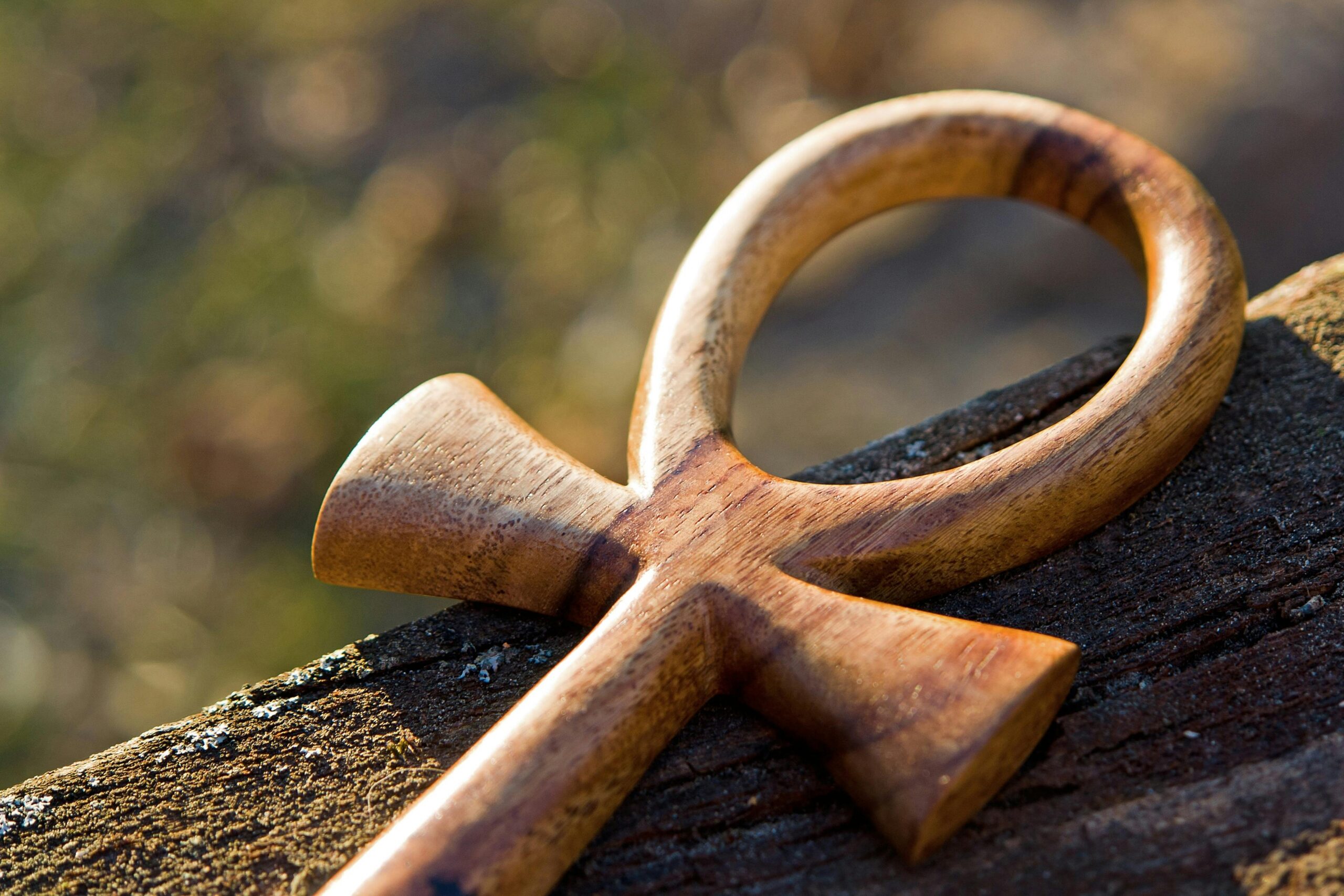
𓋹 Make a change:
Are you spiritually well? Start by asking yourself these questions:
- Do I regularly (at least 3 times per week) spend time in stillness, reflection or prayer?
- Do I experience moments of gratitude and wonder, even with ‘regular’ or simple things in life- like noticing the beauty in the different colour of leaves or giving thanks for the fact that you can see.
- Do I trust that things will work out, even when I can’t see how right now?
- Do I believe I am connected by something greater than myself?
- Do I know how to soothe and support myself in a healthy way?
If you answered ‘yes’ to most of these, you’re likely nurturing your spiritual wellness in meaningful ways, even if life still feels heavy or challenging at times. If you answered ‘no’ to a few, this might be a nudge for more spiritual connection.
Spiritual wellness can grow through small, intentional moments. Start with one gentle shift; expressing your gratitude for something every evening, a quiet reflective pause every day or a prayer each morning.
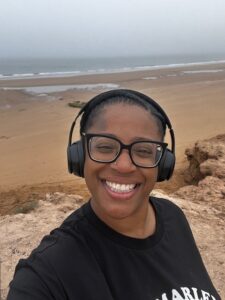
A Personal Story: How I’m learning to nurture my spiritual wellness
For me, some days spiritual wellness looks like deep reflection, prayer and gratitude. Other days, it’s just remembering to breathe fully and be present in my own life.
Nurturing my spiritual wellness often starts in the morning. I will listen to a guided meditation, which helps me set an intention for the day and I will finish my meditation with a prayer. In the evenings, if my mind is full or I’m carrying the weight of the day, I will listen to a calming guided meditation to unwind and step out of my thoughts. Sometimes I will skip the guidance altogether and sit in quiet- just me, my breath and whatever truth rises up in the silence.
Movement has also become a spiritual practice for me. A 10 minute stretch at different times in the day, or an hour of yoga, this helps me to move out of my head and back into my body. It’s a way of appreciating the vessel that carries me, holds me, and allows me to keep showing up.
And then there’s prayer.
The one thing that has significantly shaped my life.
I pray to cover myself, my home and my family. I pray for protection, for clarity, for guidance and for peace. Prayer is the grounding rhythm in my life, the reminder that I don’t have to hold stuff on my own- God has got me.
Practicing gratitude pulls me back into the present.
It reminds me not to miss or take the small things for granted; the smiles from my sons, the hugs from my husband, the kisses from my grandbaby, the cosiness of my bed at night!
I’m not perfect at any of this. Some days I forget to meditate. Some nights I fall asleep mid-prayer. And sometimes I go through an entire week where I feel disconnected and unsure. But spiritual wellness isn’t about doing everything right- it’s about returning to yourself again and again.
My spiritual journey is ongoing and deeply personal.
And every time I choose stillness, movement, prayer, reflection, or gratitude I feel myself becoming spiritually stronger and at peace.
The Spirit and the Soul:
Just as religion and spirituality are often spoken about as if they’re the same thing, the terms spirit and soul are also used interchangeably, but they are not the same and refer to very different parts of our inner being.
There are different perspectives, cultural beliefs and religious teachings that offer descriptions of the soul and how this relates to the spirit, there isn’t one universally proven definition, meaning or understanding. Some explain the spirt and the soul through religion, some understand it as energy or consciousness and others through their personal experiences and beliefs. As someone who holds Christian beliefs, my understanding of the soul and the spirit is influenced a lot by religion, but also through my own personal experiences. Here’s how I’ve come to understand it:
Our Soul is the essence of who we are as human beings. It is the seat of our thoughts, emotions, memories and feelings, the totality of who we are at a human level. The soul lives within the body, and gives it life, without soul there is no life in physical form. In his book, The Seat of the Soul, Gary Zukav describes the soul as the immortal part of us, which means even after our body dies our soul lives on.
The soul is life energy.
Our Spirit is the deepest, most sacred part of our being. It is the part that connects us to the divine, God or higher power. The spirit is where meaning, purpose and divine connection exist, and it is through our spirit that many of us experience intuition, clarity, spiritual nudges and a sense of being held by something beyond ourselves.
The spirit guides, grounds, and reveals.
And so- the importance of seeking spiritual wellness:
Because it is through the spirit that we connect to a higher power and begin to understand our purpose and meaning in life, it becomes essential that we nurture our spiritual wellness.
Cultivating spiritual wellness will not give us a perfect life or constant calm, but it can strengthen our emotional wellbeing, support our mental health and help prevent us from slipping into deeper distress without realising it.
Spiritual wellness gives you the space and courage to keep coming home to yourself, reminding you that you are more than your struggles, more than your fear and more than the weight you’re carrying.
Spiritual wellness grows in the noticing and it deepens every time you choose to slow down, reconnect and return to yourself.
Care for yourself by connecting to your spirit.
Salute to the Sources:

Respect to Dr Rheeda Walker, whose work in The Unapologetic Guide to Black Mental Health reminds us that healing for Black communities requires more than resilience, it requires soul care and spiritual grounding.
Gratitude to Rick Warren, for his book The Purpose Driven Life, which informs us that spiritual development takes decision, desire and persistence.
To Gary Zukav for his bestseller The Seat of the Soul, which encourages us to become the authority in our own lives.
Man connected to the ocean: photo by Emmanuel Black on Unsplash
Child reading bible: photo by Samantha Sophia on Unsplash
Meditating woman: photo by Cord Allman on Unsplash