
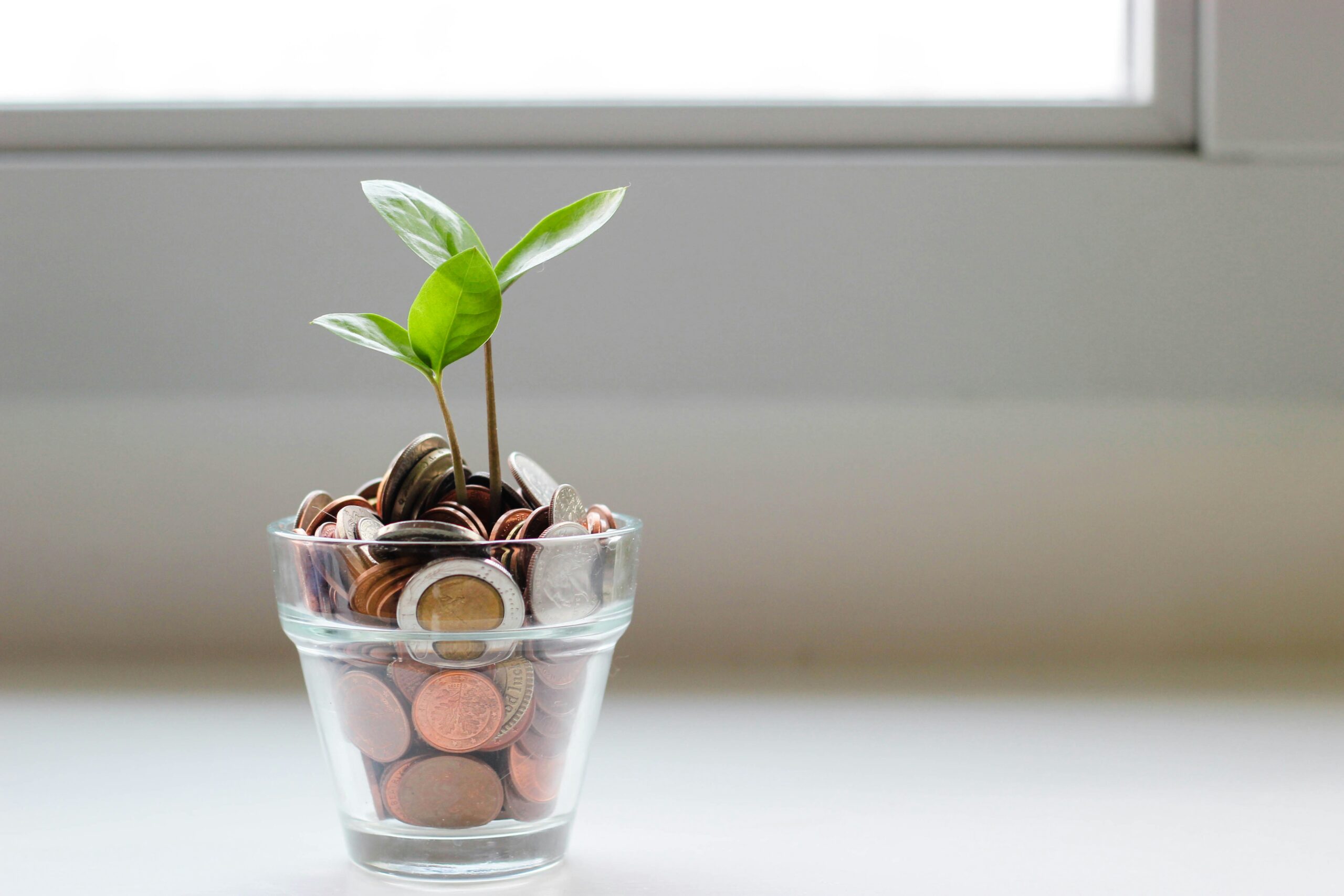
Im sure you’ve all heard of the phrase ‘financial freedom’.
I’ve heard it described as a place when you have lots of money, no debt and the freedom to buy anything you want and need. But, if that definition is true then there are a whole lot of people who have never, and will never, experience financial freedom.
And there’s another definition, that financial freedom is not having to rely on being employed (earned income) to pay our bills and enjoy life. it’s having enough savings or passive income to sustain us. Well, if that’s the case, that rules out a whole lot more of us, doesn’t it!
After reading books on the subject, attending seminars and workshops, and spending a year as a member of a Financial Academy (big up Ken and Mary at the Humble Penny) I learnt a few key things:
- Financial freedom is a destination, but it exists in degrees, so we can move up or down in our financial freedom.
- You can experience financial freedom while still being in debt.
- Financial freedom and financial independence are not the same thing.
- Financial freedom is a journey towards independence, not a single leap.
So, let’s talk honestly about what it means to have financial freedom while still owing money.

A bit of a disclaimer before you read on: I’m not a financial adviser and this Blog isn’t financial advice. What I share comes from learning through my own journey, reading and experience. If you need to make any financial decisions, it’s always best to speak with a qualified adviser who understands your personal situation.
Redefining Financial Freedom:
Financial freedom is often imagined as a state where debt no longer exists. However, this definition can feel out of reach for some people, myself included! Because, lets be real, many of us have some form of debt (mortgage, credit cards, car payments) and for a lot of people that debt wont be cleared for a long time. That doesn’t mean we can’t experience financial freedom.
There are also people who have no debt, but they are only one pay cheque, or one unexpected event away from falling into debt. This doesn’t mean these people can’t experience financial freedom either.
Financial freedom is something more than being debt-free.
From a psychological perspective, I believe financial freedom exists on a continuum, just like emotional wellness, happiness or distress. There are different degrees of financial freedom and we move up and down that scale depending on our choices and the challenges and responsibilities we face during different seasons of our life.
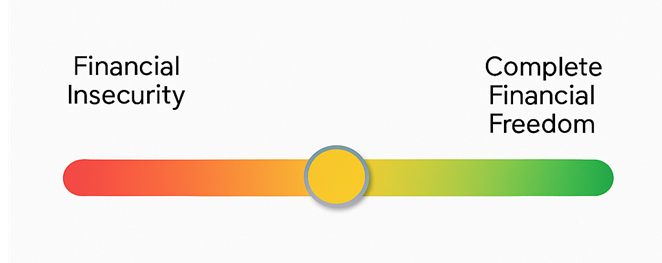
We should all aim to be at least at the middle point of this continuum, a ‘good level’ of financial freedom. Anything below that can start to impact our emotional wellbeing, leading to stress, anxiety and dissatisfaction with life.
If your goal is to achieve complete financial freedom through financial independence- amazing!
That’s my aspiration too!

But that doesn’t have to be everyone’s destination. What matters most is that your financial destination supports your peace and emotional wellbeing.
Different Destinations on the Financial Freedom Continuum:
Let’s explore what it might look and feel like to be financially insecure (the lower end of the continuum), to have good or progressing financial freedom (the middle point) or to experience complete financial freedom (the highest point).
Financial insecurity might look like:
- Living pay cheque to pay cheque, often unsure how you’ll cover the next bill.
- Regularly relying on credit cards, loans or borrowing money from other people to get through the month.
- Not being able to pay your bills- every month there is at least one bill you are unable to pay.
- Not having enough to save any money.
- Feeling anxious when unexpected costs arise, like the car breaking down or a child’s school trip coming up.
- Avoiding checking your bank account because it’s too stressful.
If you can identify with at least two of these you are likely to be at the financial insecurity destination; money feels like a constant source of pressure and financial decisions often come from survival mode rather than a sense of stability or purpose.
You are not alone.
There are millions of people living in financial insecurity, some more extreme than others. The good news is you can change your situation if you’re willing to seek help and put in the work. There are lots of free tools and resources that can help you, ive listed some of them in the make a change section below, please note some of these are only relevant for people living in the UK.
A good/progressing level of financial freedom might look and feel like this:
- You have a good understanding and awareness of where your money goes, because you regularly budget and track your expenses.
- You’ve developed some good financial habits: like saving regularly, paying off debt (even if slowly) or investing small amounts.
- You are educating yourself about money and improving your money mindset.
- You manage to pay all your bills each month.
- You might still have some debt, but you’re managing it, it’s not managing you.
- You can handle small financial shocks without panic.
- You feel more in control, even if you’re not “there” yet.
At this financial destination you’re learning, adjusting and building positive money habits and momentum. You’re not just surviving, you’re starting to thrive.
Having complete financial freedom might look and feel like this:
- You have little to no debt, which you can pay off at any time with ease.
- You are not relying on a job to provide you with an income, you have control over this, and usually have more than 1 income source.
- You have options. You can take a break from work, explore a passion project, or say no to what doesn’t serve you without fear of financial fallout.
- Your money supports your values, not the other way around.
- You have the emotional space to rest, create and dream because your finances no longer drain your mental energy.
- You’re able to invest, give and live with generosity and purpose.

This is financial freedom at its fullest, its not about wealth for wealth’s sake, its about choice, security, and peace.
Financial freedom is not about being debt-free, its being in control of your finances, understanding where your money is going and having habits that will empower and enable you edge closer to financial independence.
𓋹 Make a change: If you are in a place of financial insecurity, please don’t despair. You are absolutely not alone. There are different places you can go for support or tips, like those listed below (please note some of these are only relevant for people living in the UK):
The ultimate guide to budgeting
5 Hidden Ways Money Controls your Life
The Role of Habits in Financial Freedom:
Good habits are the foundation of the ‘Good/Progressing‘ position on the continuum. People at this point have likely spent time learning new money habits and, crucially, unlearning the unhealthy ones that keep them stuck.
Bad habits are the hallmarks of the financial insecurity position. And if those habits continue, they won’t just pull you deeper into the abyss of financial insecurity, they can affect your emotional wellbeing, strain relationships and lead to a very unhappy existence.
James Clear, in his book Atomic Habits powerfully reminds us that small good habits compound over time- good habits repeated over a period of time can be life-changing! This is because the effects of our habits multiply when we keep doing them, they might seem invisible day by day, but over months and years they add up. A bit like the tall, slim geek you remember just before you left school- and who you see 2 years later and their biceps are busting out their shirt as a result of their daily gym habits.
The same is true in reverse. Small bad habits can quietly grow into major problems. For example, ‘treating’ yourself to lunch when at work three days per week might not feel like a big deal on the day, but over a year, that could add up to hundreds of pounds that could be saved, invested or used to clear debt.
I’m quite partial to a deli lunch, it typically costs me £6.50. If I treated myself to this 3 times per week for one year (less holidays from work) that is a spend of £897 per year!
A personal story:
I remember working in a restaurant years ago.
The manager there was sharp.
Always dressed to the nines; designer suits and shoes and a cologne that turned heads before he even entered the building.
But, beneath all that he had a pretty bad gambling habit.
Like most habits, it probably started small, manageable, maybe even exciting. (I’ve been there myself- but that’s a story for another blog!)
I left my job at the restaurant to start something new and shortly after came across a story about the Restaurant Manager in my local newspaper. He was stealing money from the restaurant to fund his gambling habit (and probably his designer clothes too!). He was convicted and sentenced to a short term in prison.
No more job, no more designer clothes, no more turning heads.
Bad habits, if kept up, can grow to destroy you!
Ways to Experience Financial Freedom- When Still in Debt:
Being in debt can feel like walking around with a weight on your shoulders.
The weight is there when you’re paying bills, making plans or even trying to rest. But trust me, you don’t have to be debt-free to start experiencing financial freedom.
Freedom begins the moment you decide to face and manage your finances.

Here are some practical ways to start living with more financial freedom and confidence, even as you continue to pay off what you owe:
- Own your numbers. Write down what you owe, not to shame yourself, but to see your situation clearly. When you face your numbers, you take back control.
- Start budgeting. Create a realistic weekly or monthly budget plan that reflects your life. Budget plans are boundaries, they will help you plan with peace not panic.
- Focus on repaying debt. Identify what you can redirect towards repayment. Even small, consistent payments above the minimum will help reduce what you owe faster. Progress may feel slow at first, but consistency compounds.
- Building an emergency fund. Even a small savings cushion (£100, £250, £500) can bring emotional relief. It’s not just about money; it’s about peace of mind knowing you can handle life’s surprises.
- Create small wins. Celebrate each repayment, even the tiny ones. Each win is proof of growth, and acknowledging it builds momentum.
- Reframe the story. Instead of saying ‘I’m in debt’, try ‘I’m in transition’. Language shifts your energy from lack to progression.
- Seek community. Talk about money in safe, non-judgemental spaces. Silence breeds shame, community breeds strength.
- Practice gratitude for the money you do have. Gratitude shifts your energy from lack to abundance and opens the space for more blessings to flow in.
- Stay balanced. Avoid complete deprivation. Allow yourself small rewards or treats within your budget, it is good for your wellbeing and morale.
- Invest in financial education. Learn about money through books, podcasts and trusted online resources. Financial literacy builds confidence and empowers smarter financial decision-making.
- Be patient and persevere. Financial wellness takes time, it’s about commitment, not speed. Keep showing up for yourself, even on the hard days.
By embracing these habits and shifts in mindset, you can begin to redefine what financial freedom looks like for you.
Final Word:
Yes- you can experience financial freedom and still be in debt, because freedom is having control, awareness and peace.
When you make a conscious choice and effort to face and manage your finances you are already stepping into freedom, not because you’ve finished the journey, but because you’re walking it, with commitment.
Being in debt now doesn’t define your future, every step, no matter how small, brings you closer to financial independence.
Keep going. X

Salute to the Sources:
Much respect to Ken and Mary at the Financial Joy Academy, for their practical wisdom and joyful approach to building wealth.
Gratitude to James Clear, author of Atomic Habits, for showing how small, consistent actions can transform not just our routines but our reality.
Main Blog Photo by Micheile Henderson on Unsplash
Money Photo by Photo by Clément Proust on Pexels
Photo of Black Woman by Aidah Kiirya on Unsplash
