
“Can you lend me £100 until payday?”
“Can I borrow your car this Saturday”
“Can the kids stay at yours this weekend?”
We’ve all been there. Someone asks for our time, energy, or resources, and even though we want to say: ‘No, I can’t,’ what slips out our mouth is “yeah okay.” We then feel drained, resentful, stressed- wondering why we didn’t just say no.
Learning to say ‘no’ isn’t about being selfish.
Sometimes we need to say no to protect our peace and increase our emotional wellness.
When we give ourselves permission to say no, we create space for peace, balance and happiness.
So, why do so many of us find saying no so difficult? And what do we need to do to honour our own needs without feeling guilty?
Let’s go a little deeper…
Saying no is difficult because…you fear disappointing others.
One of the biggest reasons we say yes when we mean no is because we don’t want to let people down. Especially in Black communities where ‘showing up’ for others is a powerful expression of love, saying no can feel like a betrayal.
I know this firsthand. I’m the eldest of seven siblings- the ‘clever one’ who went to university, the ‘successful one’ who has a good job. The ‘sensible one’ who knows what to do when things go bad, ‘the reliable one’ who people can depend on.
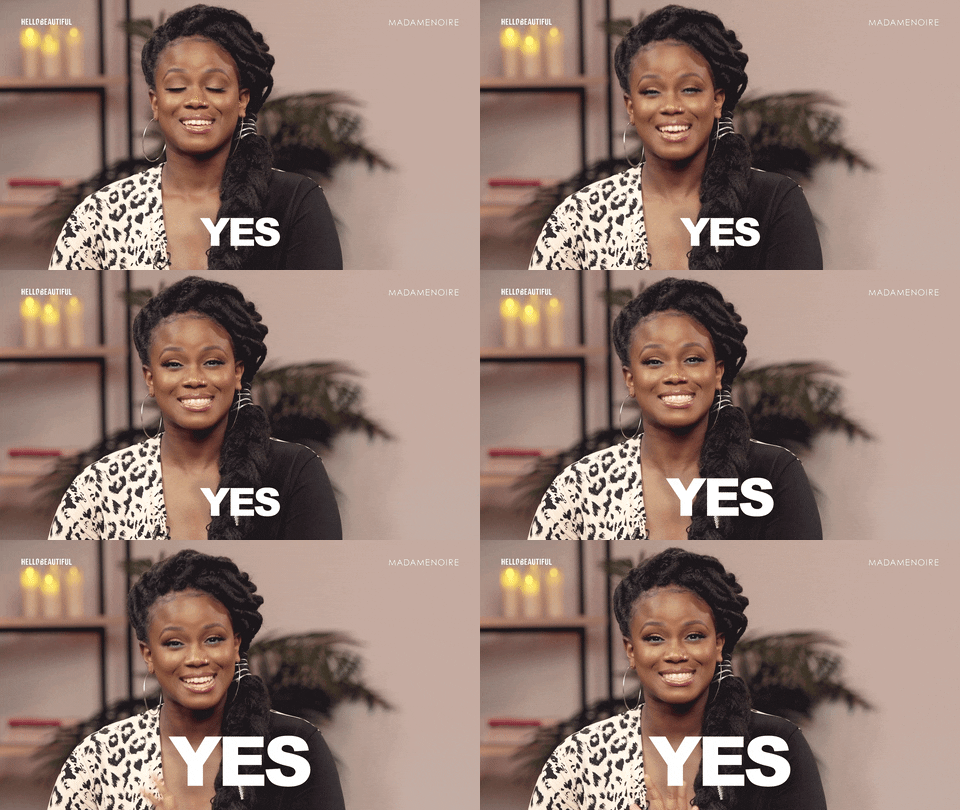
Noone told me I must always say yes…it was those frigging labels!
The ‘clever one’.
The ‘sensible one’
The ‘responsible one’.
I wore those labels like a second skin! And, being real, I loved them (who wouldn’t!?)
The problem with labels is that you believe you have to live up to them. So, when my family asked for help, I rarely said no.
Even when I was exhausted. Even when I couldn’t afford to. Even when it meant neglecting myself, I said yes.
Many of us wear labels; ‘the responsible one’, ‘the reliable one’, ‘the strong one’, and even though those labels might feel good, they can trap us; we start to worry that if we say no, we’ll lose respect, admiration or love. Worry that we’ll be stripped of our labels. Worry we will disappoint.
The truth is, saying no might feel uncomfortable at first, but disappointing someone in the short term often strengthens your relationships in the long run because it sets healthy expectations.
𓋹 Make a change:
Next time you feel pressure to say yes, pause and ask yourself: am I saying yes because I want to, because I feel I have to or because I’m uncomfortable saying no? If it’s not because you want to- that is your cue to say no.
Saying no is difficult because…you need to be liked.
Wanting to be liked is at the core of who we are as humans.
Historically, being liked and accepted was how we survived; belonging to a group or a tribe gave us protection, resources and a sense of identity.
However, wanting to be liked is not the same thing as needing to be liked.
(I’ll be diving deeper into the psychology of needing to be liked in a separate Insight, stay tuned for that).
There are dangers of saying yes just to be liked:
- Lose Authenticity– when you agree to things you don’t want to, you betray your true self and values.
- Resentment and Burnout- overcommitting yourself to please others can lead to exhaustion, stress and resentment towards the same people you were trying to please.
- Superficial Relationships: people like the version of you that always pleases, not the real you.
People who genuinely value and love you will respect your boundaries. Saying no isn’t rejection, it’s honesty. And honesty builds stronger relationships.

Saying “no” when its necessary, is a powerful way of teaching others (and yourself) that your needs, your time and your boundaries are important.
𓋹 Make a change: Next time you’re asked to do something and deep down you want to say no, pause and remind yourself: ‘The people who truly care about me want the real me, not the version who always pleases. It’s okay to say no’.
Saying no is difficult because…you fear rejection.
If anyone understands the pain of rejection, Black people do.
Rejection is one of the main ingredients in the poison of racism, discrimination and prejudice. And if you are Black and living in America, the United Kingdom or Europe chances are you’ve been forced to drink this poison. From workplace discrimination to systemic barriers, rejection has been part of our lived experience. It’s no wonder many of us attempt to avoid it at all costs.
Rejection is something most people fear. Why? Because we all need other people to survive.
But, as Carleen Brice reminds us in her book Walk Tall, Affirmations for People of Colour:
“We shouldn’t allow our fear of rejection to drive us into unhealthy or dishonest situations”
Unhealthy and dishonest situations arise if we say yes when we really want to say no.
Saying yes to avoid rejection often leads to losing ourselves. Whereas, saying no creates space for relationships that honour who we really are.
𓋹 Make a change: If you often say yes because you fear rejection, try this daily practice: each morning, look in the mirror and affirm:
“I am not afraid of rejection. I know the rewards that come with being true to myself”
(Affirmation from Carleen Brice’s Walk Tall, Affirmations for People of Colour.)

Saying no is difficult because…that’s how you show love.
Saying ‘no’ to someone does not mean you don’t love them.
Saying ‘yes’ to someone does not prove your love to them.
Ive been there, got the t-shirt – and the jeans, and the hoodie, and the trainers! I can’t count how many times ive said yes purely because I love that person, and it has cost me deeply.
However:
- Love should never cost you your emotional wellness.
- Generosity is beautiful, but it becomes unhealthy when your love is measured only by self-sacrifice.
- Sometimes the most loving thing you can say is ‘no’.
There is power and love in saying ‘no’ when:
- You say ‘no’ to protect the people you love: ‘No, I can’t support a decision that I believe will harm you.’
- You say ‘no’ to protect yourself: “No, I don’t have the emotional or physical capacity for that right now.”
- You say ‘no’ to protect the relationship: “No, I’m not okay with putting our friendship at risk’
Remember there is a fine line between supporting someone and enabling their negative habits or behaviours.
Always saying “yes” can block people from facing the lessons they need to grow. As Jordan Peterson wrote in 12 Rules for Life:
“Before you help someone, you should find out why that person is in trouble.”
By stepping in, you might save a person from temporary discomfort but you may be keeping them stuck in the same cycle.
𓋹 Make a change: Instead of rushing to say yes, practice pausing. Say, “Let me think about it,” or “I’ll get back to you.” This gives you time to check in with yourself, and then ask yourself three questions:
1. Am I helping them grow, or am I preventing them from facing what they need to?
2. Does this “yes” align with my values?
3. Will a yes cost me my peace, safety, or wellbeing?
Saying no is difficult because…its in our genes.
In her book Post Traumatic Slave Syndrome, Dr. Joy DeGruy explains how our behaviours can be shaped by events that happened in previous generations, passed down through a kind of genetic memory.

When I think about this, I reflect on the stories of my grandparents, who arrived in England from Jamaica as teenagers in the 1960s. Like so many from the Windrush generation, they carried not only their suitcases but also the weight of a new life in a place that wasn’t always welcoming.
But community was their lifeline. Saying ‘yes’ to each other was the only way to survive:
- Different families renting rooms in the same house, squeezing in but making it work.
- Food was stretched and shared.
- Pardner schemes were created to help with those big purchases when bank loans were not possible.
All of this was about saying ‘yes’. Yes to pulling together. Yes to lifting each other up. Yes to putting community first, even when it meant personal sacrifice.
That instinct to say yes, to always be available, to always give, didn’t just fade away with time, it may be part of our genes, passed down through genetic memory.
𓋹 Make a change: If saying ‘yes’ feels like second nature, something built into your DNA, know that you have the power to rewrite this pattern. One way is through daily affirmations. Stand in front of the mirror, look yourself in the eyes and speak life into your new way of being, say:
‘I cannot always say yes, even when it feels natural to, because I have a responsibility to protect my peace and take care of my own needs’
Research shows when you practice self-affirmations, you’re not just saying nice words -you’re actually activating the reward and self-processing centres in your brain. Each time you speak affirming words, your brain starts to strengthen and reinforce them, which will help you face challenges and make healthier choices.
Saying no is difficult because…you don’t know how to say no.
Have you ever wanted to say no, but couldn’t? Sometimes the hardest part is the how.
It should be simple right? Saying a tiny two-letter word. And yet, for so many of us, it feels almost impossible to say.
It’s quite common; there are a lot of people that struggle to say ‘no’.
For a long time saying no felt heavy for me too- like I was letting someone down just by honouring my own limits. I’d stumble over my words, feel a discomfort rise in my stomach and then end up saying yes when every part of me wanted to say no. For me it wasn’t about needing approval or fearing rejection; I simply didn’t know how to say no with clarity and kindness. These days, that struggle feels further behind me- saying no is an act of self-respect.
The key is understanding that ‘no’ can be kind, respectful and clear all at once. You don’t need a long explanation. You just need confidence in your boundaries.
Here are some phrases you can keep in your back pocket:
- “I appreciate the invitation, but I can’t commit to that right now.”
- “That doesn’t fit with my priorities at the moment.”
- “I don’t have the space for that right now, but thank you for thinking of me.”
If you’d like more tips: check out my free resource: Different Ways to Say No Without Guilt.
𓋹 Make a change: Practice saying no in low-stakes situations like skipping a social event you’re not really feeling. The more you practice, the more natural and easier it becomes.
Final word
Constantly saying yes can leave you exhausted; body aching, mind overwhelmed, relationships strained. But the greatest cost is losing yourself.
When you silence your needs to please others you abandon your own peace, your own joy, your own voice.
Boundaries are not walls, they are doors. They let love in and keep harm out.
They help us protect what matters most – our emotional wellbeing.
So, remember this: every time you say no to something that drains you, you are saying yes to something bigger:
Your peace. Your health. Your dreams. Your emotional wellness.
Salute to the sources

Manners and respect to the voices and creators that inspired or were used in this insight:
Dr. Joy DeGruy, for her book Post Traumatic Slave Syndrome, reminding us that healing is both individual and generational.
Carleen Brice, for Walk Tall: Affirmations for People of Colour, whose words call us to live with courage and self-respect.
Dr. Jordan B. Peterson, for 12 Rules for Life, which encourages thoughtful boundaries and self-awareness in our relationships.
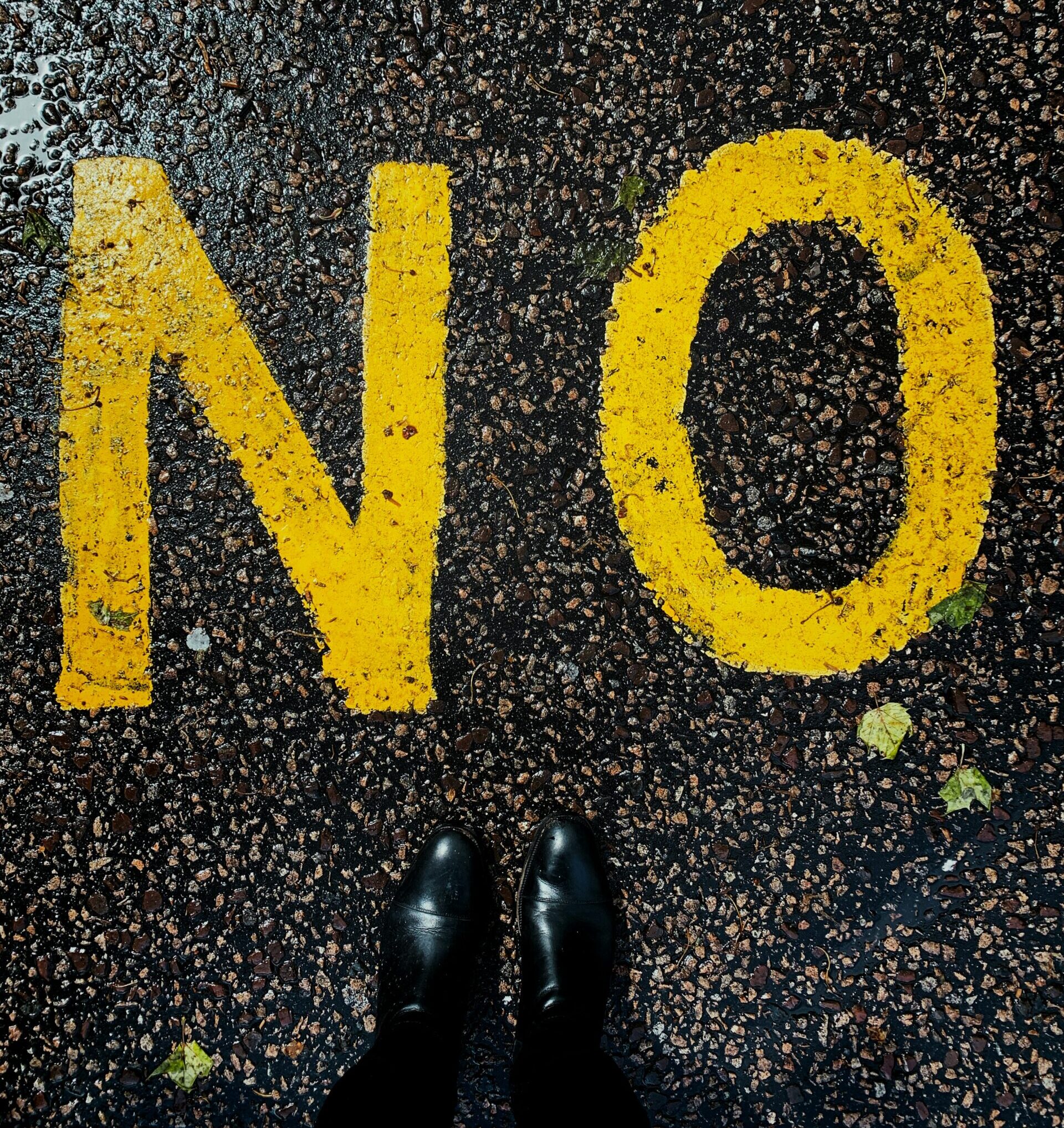
Main Insight Photo, NO, by Jon Tyson on Unsplash
No written on face image by Photo by cottonbro studio on Pixels
Hand with ‘No’, Photo by Cottonbro Studio on Pexels.
Man in the mirror image by Diva Plavalaguna on Pixels
DNA Photo by digitale.de on Unsplash
And to the countless elders, parents, and community members who taught us the power of collective care; your ‘yes’ built the foundation we now protect with our ‘no’.